Sit-on-top
Petrel
The fastest sit-on-top you can still relax in
$100 to the Central states, $200 to the East Coast.
Best for
The experienced paddler who wants surfski-level speed in a stable sit-on-top platform. Multiday expeditions, fitness, fishing, or just the fastest way to cover water.
What makes it Lekker
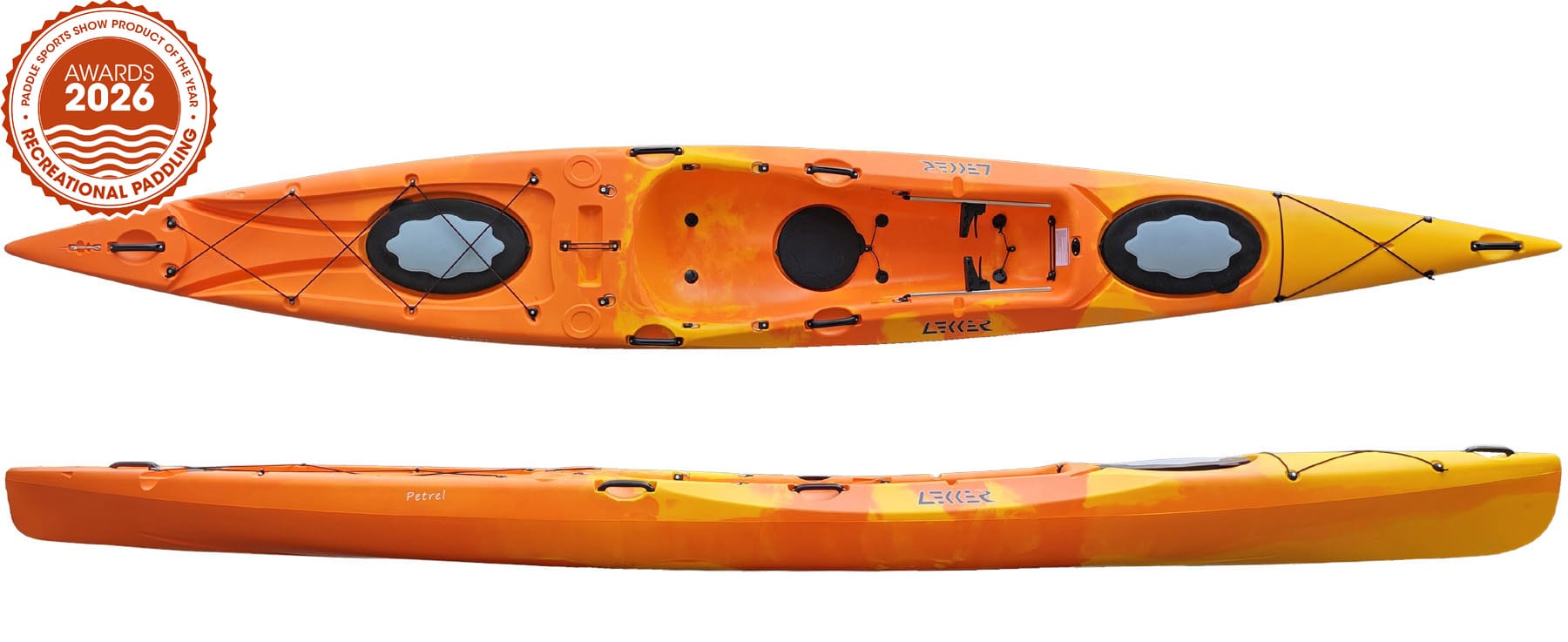
- ⭐ Winner: Product of the Year — 2026 Paddlesports Show, Strasbourg
- Blends Malachite stability with surfski speed
- Streamlined hull with subtle rocker and piercing bow
- Centred footwell + extended paddle cutaways for an efficient stroke
- Generous bow volume with large oval front hatch
- Shallow tankwell with recessed oval rear hatch — low centre of gravity
- 6 handles (bow, stern, 2 per side) for easy solo handling and re-entry
- Rod-holder interfaces for fishing
Photo gallery
Specifications
- Length
- 16'0" / 487 cm
- Width
- 25" / 64 cm
- Weight
- 62 lbs
- Capacity
- 309 lbs
- Hatches
- 3 (large oval bow, recessed oval stern, 10" day hatch)
- Skeg
- none
- Rudder
- optional
- Material
- Rotomolded polyethylene
How it stacks up
- Swell Scupper 16 ($2,000+, made in the USA) — the Petrel's one direct competitor, and Celliers designed it. Building it under another brand's house features made it a worse boat than the one he drew for himself.
- Nearest others: Old Town Sportsman 106, WS Recon 120, Bonafide EX123 — all shorter, slower, less storage.
Common questions
What makes the Petrel special?
It won Product of the Year at Europe's largest paddlesports trade show — beating every kayak, canoe, and SUP in the recreational category. It delivers surfski-inspired speed in a stable sit-on-top platform that doesn't exist anywhere else in the US market.
Is the Petrel actually available in the US?
Yes. The first US boats are in California now. It's $1,990; tell us where you paddle and we'll confirm shipping to your zip, and hold one while you decide.
Is the Petrel stable enough for intermediate paddlers?
Yes. Despite its speed-oriented design, the Petrel maintains good stability thanks to soft rails designed for edge-control steering. Most paddlers won't need the optional rudder.